Why website speed matters for SEO
SEO & performance Published on , updated on · 3 min readWebsite speed affects how visitors access content and interact with pages. It is also one of the factors Google considers as part of page experience. That doesn’t mean a fast website will automatically rank well: content relevance and many other factors remain decisive.
The challenge is therefore twofold: reduce friction for users and make sure important pages work properly.
Speed, user experience, and SEO
A slow page can delay access to information, make interactions less pleasant, and increase the risk that a visitor leaves. The effects vary with the type of website, the device, the network, and the user’s intent.
For SEO, performance is one signal among others. It does not replace useful content, a clear architecture, or good indexability. It is better to treat speed issues as part of an overall quality effort.
Understanding Core Web Vitals
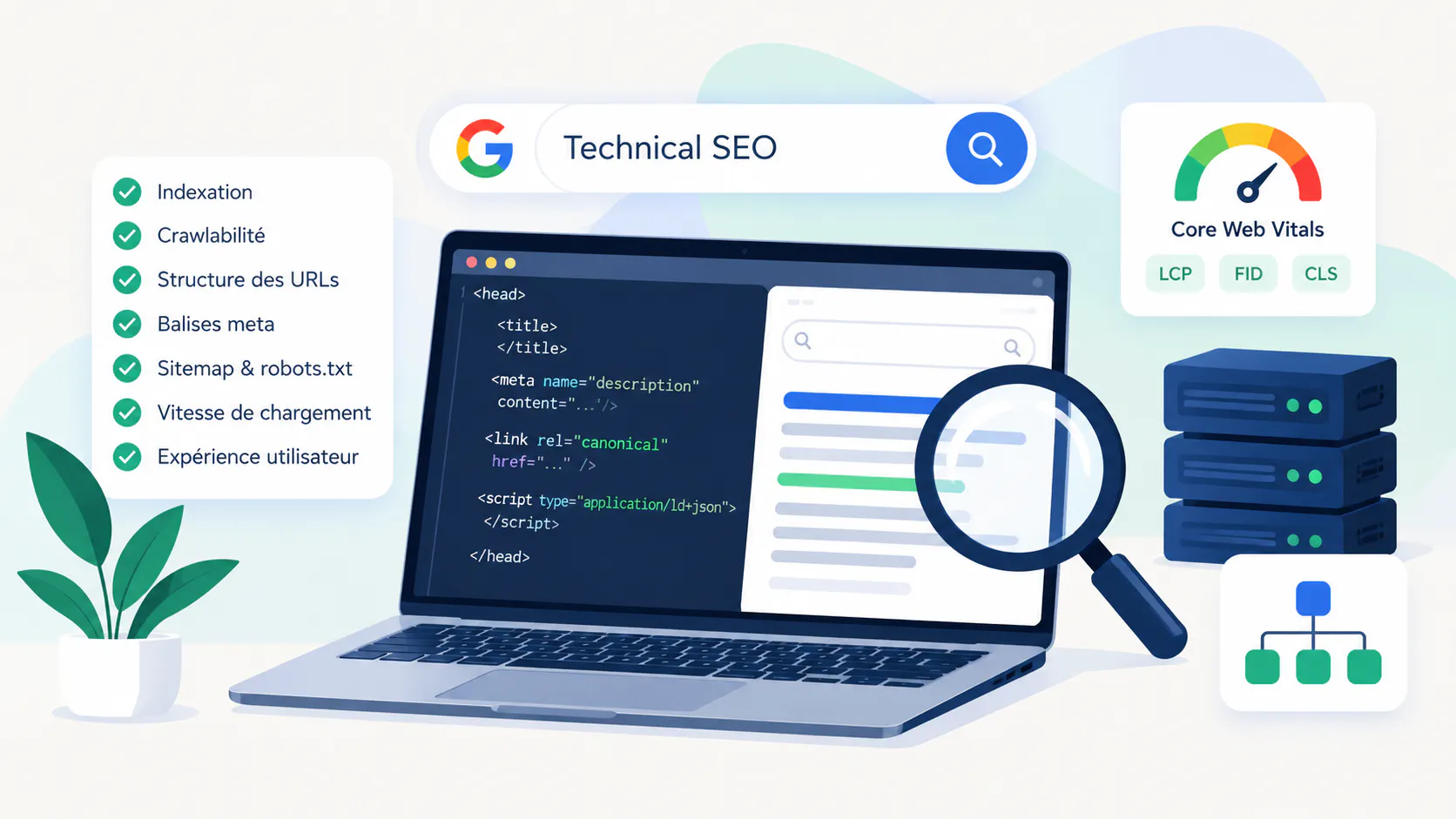
Core Web Vitals are metrics that describe certain aspects of the user experience. The three main metrics are LCP, INP, and CLS.
LCP: loading the main content
Largest Contentful Paint (LCP) measures the time it takes to display the largest visible content element in the viewport. This element can be an image or a block of text.
A high LCP can be caused by a slow server response, a large resource, a heavy image, or resources that delay rendering.
INP: responsiveness to interactions
Interaction to Next Paint (INP) assesses how responsive a page is to user interactions. A page can look loaded yet respond slowly to clicks or typing if the browser is busy with long tasks.
Reducing unnecessary JavaScript work and improving how interactions are handled can help improve this metric.
CLS: visual stability
Cumulative Layout Shift (CLS) measures unexpected movement of elements during loading. It can happen when an image has no reserved dimensions, an ad appears late, or an element is injected without space set aside for it.
A stable layout helps visitors read and interact without losing their place.
How do you measure a website’s performance?
Tools such as PageSpeed Insights and Lighthouse let you analyze pages and identify opportunities for improvement. It is important to test several page templates, especially landing pages and the user journeys that matter for the business.
Lab data is useful for reproducing test conditions. Field data, when available, better reflects the experience of real users. Both should be interpreted in context rather than focusing on a single score.
Common causes of a slow website
Causes vary with the technology and architecture. Common issues include:
- images that are too heavy or poorly sized;
- unnecessary JavaScript and CSS, or code loaded too early;
- third-party scripts that block the browser;
- slow server response times;
- poorly optimized fonts and resources;
- components that trigger too much client-side work;
- no suitable caching strategy.
A diagnosis should identify the real cause before choosing a fix.
How do you improve loading speed?
Start with the most important pages and issues. Depending on the diagnosis, actions may include compressing and resizing images, lazy-loading non-priority resources, reducing JavaScript, improving caching, or optimizing rendering.
It is useful to measure before and after each change. An optimization can improve one metric while having little effect on another, so testing should cover the overall experience and the features.
When should you call in a specialist?
If performance remains poor despite simple optimizations, if the website relies on a complex architecture, or if the issues involve JavaScript rendering, a deeper technical analysis may be needed.
I can help with performance and technical SEO issues, especially in Vue.js and Nuxt.js environments.