
What is technical SEO?
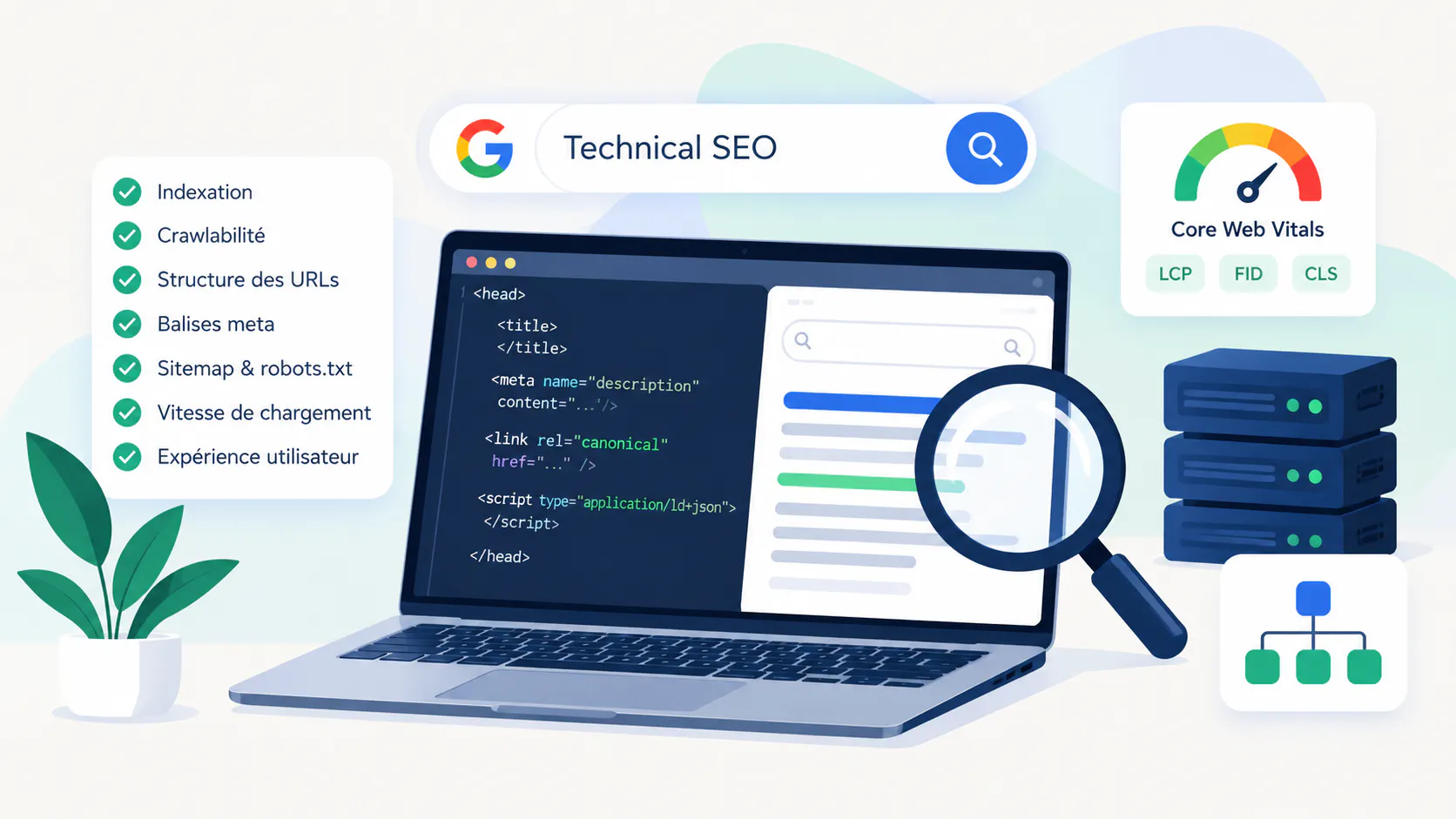
SEO & performance Published on , updated on · 2 min readTechnical SEO refers to the optimizations that help search engines crawl, understand, and index a website. It covers URLs, server responses, internal linking, page rendering, metadata, and performance, among other things.
Its role is to remove technical obstacles that can prevent search engines from accessing content properly. It does not replace editorial quality: a technically accessible website must also offer information that is relevant to its audience.
What is technical SEO for?
Technical SEO helps confirm that important pages can be discovered and processed correctly. It also helps spot inconsistencies that make the website harder to manage: duplicate pages, broken links, conflicting directives, or content that does not render as expected.
It is foundational work. A technical fix can remove an obstacle, but on its own it does not guarantee more traffic or a specific ranking.
The main elements of technical SEO
Crawling and indexing
Search engines discover pages by following links and reading files such as the XML sitemap. Robots directives, noindex tags, HTTP status codes, and canonical URLs help indicate which pages should be crawled or indexed.
You need to check that strategic pages are accessible and that the directives match the website’s intent. A sitemap does not guarantee indexing; it makes URLs easier to discover.
Architecture and internal linking
A clear architecture helps visitors and search engines understand how the website is organized. Internal links make pages discoverable and connect related content.
Important pages should be reachable through relevant links. Anchor text should describe the destination, and navigation should not rely only on elements that are hard to crawl.
JavaScript rendering
Some websites built with JavaScript generate part of their content in the browser. It is therefore important to check that search engines can access the content, links, and metadata they need.
Server-side rendering or static generation can be useful depending on the project, but no approach removes the need to test the real pages.
Performance and Core Web Vitals
Performance affects the user experience and is part of page quality. Core Web Vitals measure, among other things, the loading of the main content, responsiveness, and visual stability.
An audit should identify the causes of the issues, for example heavy images, costly scripts, or slow server response times.
Structured data and metadata
Titles, descriptions, and canonical tags help describe pages and handle some duplication cases. Structured data can provide explicit information about the content, as long as it is accurate and follows the applicable guidelines.
It does not guarantee a rich result. The data must match the visible content and be kept up to date.
How do you run a first diagnosis?
Start by selecting the most important pages: home, service pages, categories, and content that drives visits or conversions. Check their accessibility, response code, indexability, titles, internal links, and rendering.
Crawling tools, Search Console reports, and performance measurement tools can help identify issues. The data should be interpreted in light of the website’s size, its architecture, and recent changes.
When should you hire a technical SEO consultant?
Specialized help can be useful if important pages are not indexed, if the website relies on complex JavaScript rendering, if a migration has caused issues, or if performance is hard to improve.
I can support you with the analysis and, when the project allows, with implementing the technical fixes.